
Map 2 · Free · Hard
Southern Bayou: fishing a cypress swamp
Slow, tea-dark water under hanging moss, cypress knees and lily pads, thunderstorms in the afternoon — and fish you will not find up north. The Southern Bayou is the second map in Survival Angler.
How to get there
The bayou is free and open to everyone during Early Access — no unlock needed. Play the Southern Bayou or pick it on the start screen. It is a hard map: alligators and cottonmouths can end a trip in a second, so many anglers learn the ropes on the Northwoods Lakes first. Your money, gear, journal and angler level travel with you between maps.
What the swamp looks like
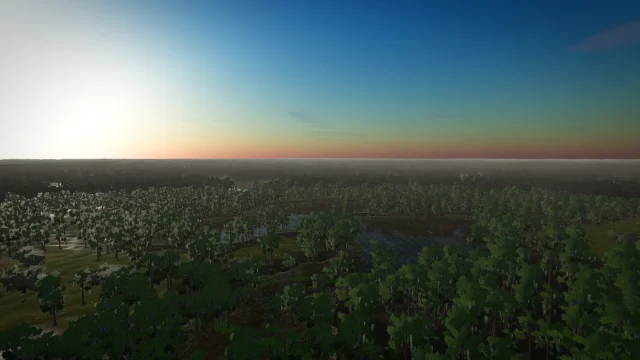
Eighteen lakes, ponds and sloughs sit in a flat cypress forest. The water is shallow — most banks shelve so gently that the water is only a hand deep several metres out — and much of it is covered in duckweed, lily pads and weed. Live oaks and bald cypress draped in Spanish moss line the banks. At dawn, fog lies on the water.
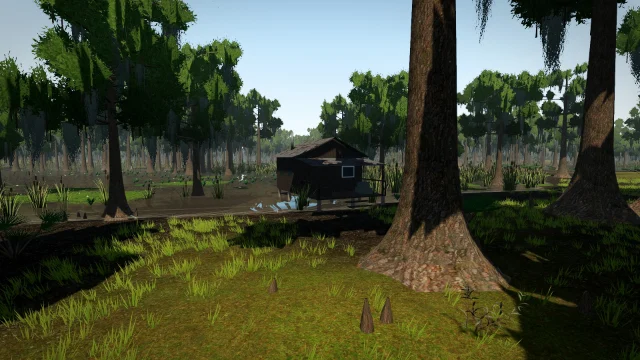
People have lived here for a long time: you will find a stilt house with a porch, a long pier with a tin-roofed bait shack, cypress-stump steps across a pond and a fishing raft.
The fish
The bayou has 19 regular species and 3 legends: the Bayou Belle, a giant largemouth in the camp lake; the Swamp King, a flathead catfish in Tupelo Lake; and Ironjaw, an alligator gar in Gator Slough. Thirteen of the regular species live only here:
- Bass and sunfish: spotted bass, yellow bass, white crappie, redear sunfish, warmouth
- Catfish: blue catfish, flathead catfish
- Ancient predators: bowfin, spotted gar, alligator gar, chain pickerel
- Bottom feeders: freshwater drum, bigmouth buffalo
Largemouth bass, bluegill, black crappie, channel catfish, bullhead and carp live here too. Bayou fish are worth more at the trading post than northern fish — the swamp is the harder map.
Fishing the bayou
- Weeds snag lures. Duckweed mats and weed beds grab hooks. Tap Space to jerk a snagged lure free; keep reeling and the line snaps. The rubber frog is weedless.
- Crawfish traps. Sink a trap in shallow water by the bank and come back a few hours later for live crawfish — the best bait for bass and catfish.
- Catfish jug lines. Toss a baited jug out to deeper water at dusk and check it in the morning. Catfish feed hardest after dark.
- Legend signs. Each day, each bayou legend leaves signs — big swirls and splashes — somewhere in its lake at the hour it feeds. Find them and that legend is far more likely to take your bait for the rest of the day.
Getting around: the airboat
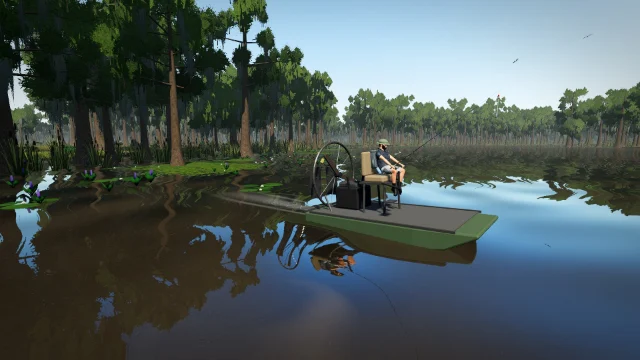
A motorboat needs half a metre of water. The swamp airboat — a flat aluminium hull pushed by a big caged propeller — skims over water only a few centimetres deep, across duckweed and lily pads, into backwaters no other boat can reach. It is fast and turns on the spot, but it is loud and thirsty. You can fish from its high seat.
Heat, storms and the night
The bayou is hot. You get thirsty much faster, especially around noon — fish in the shade of the trees or under an umbrella, and drink often. Afternoons often build into thunderstorms with lightning; rain here cools you down rather than chilling you. Nights are warm, bullfrogs call and the mosquitoes wear you out away from the fire.
Watch the water
Alligators and cottonmouths live in the swamp, and a bite ends your trip. There are no warnings on screen — watch for the signs nature gives you. They keep away from the camp, the trading posts and the buildings.
Fair play across maps
The evening tournament scores each fish against its own species — 0 points is an average fish, 100 is trophy size — so a trophy perch from the north can beat an average bayou catfish. Collection titles are kept per map: the bayou has its own Bayou Scholar, Swamp Legend Hunter and Gar Wrangler.