
Fish species · Predator
Spotted bass: the scrappy bass of rock and current
Smaller than a largemouth but tougher pound for pound, the spotted bass hangs on rock, timber and drop-offs and hits a jig like a hammer.
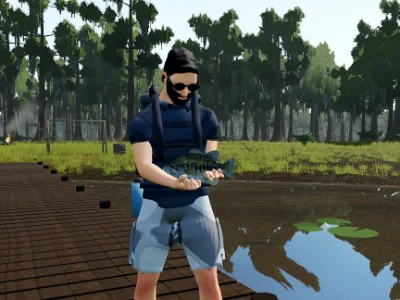
How to recognise a spotted bass
The spotted bass (Micropterus punctulatus) looks like a slimmer largemouth. It is olive-green on the back with a blotchy dark band along the side, and — the giveaway — neat rows of small dark spots on the lower flanks. The mouth is smaller: the jaw ends level with the eye. Most fish weigh 0.5–1.5 kg; anything over 2.5 kg is a trophy.
Where spotted bass live
Spotted bass like a bit of current and hard structure more than thick weed:
- Rock, gravel and riprap banks.
- Drop-offs where a shallow flat falls into deeper water.
- Creek mouths and channels with moving water.
- Sunken timber and stumps along the edges.
They often hold a little deeper than largemouth on the same lake and roam in small groups.
When spotted bass feed
Dawn and dusk are prime. On bright days they slide deeper along the drop-off and feed in short bursts; a cloudy morning can keep them biting for hours.
Best lures and baits for spotted bass
- Soft-plastic jigs hopped down rock and drop-offs.
- Diving crankbaits that knock into the bottom.
- Live minnows under a float near structure.
- Surface poppers at first light over shallow points.
How to catch spotted bass
- Fish the hard edges. Cast past a rocky point or drop-off and work the lure back down the slope.
- Keep in touch with the bottom. Most bites come as the jig falls — watch the line.
- Move until you find a group. Where you catch one, there are usually more.
- Be ready for a jump. Keep the rod low and the line tight when the fish heads for the surface.
Handling spotted bass
Lip-grip briefly, support larger fish under the belly and release them quickly back over the structure they came from.
Spotted Bass in Survival Angler
- Found on
- Southern Bayou
- Where to look
- Sunken timber & rock, Drop-offs, Creek mouths
- Depth
- 0.8–5 m (3–16 ft)
- Most active
- Dawn & Dusk
- Best baits
- Live crawfish, Soft-plastic jig, Diving crankbait
- Typical size
- 0.8 kg (1.8 lb)
- Trophy from
- 2.5 kg (5.5 lb)
- Float (bobber) bite
- Plunges — the float is pulled hard under in one go. Strike fast — the window is short.
- How it fights
- Leaps clear of the water — keep the line tight when it jumps.
Numbers come straight from the game’s fish data, so the page and the lake always agree.
In Survival Angler, spotted bass live in the Southern Bayou, around sunken timber, drop-offs and creek mouths. A soft-plastic jig or diving crankbait worked along the edge is the classic approach, and a live minnow under a float works too. The float plunges when one takes, and they jump during the fight — keep the line tight.
Frequently asked questions
How do you tell a spotted bass from a largemouth?
Look at the mouth and the belly. On a spotted bass the upper jaw stops at or before the back of the eye, and there are rows of small dark spots below the side stripe. A largemouth’s jaw runs well past the eye and its belly is plain. Spotted bass often have a small, rough tooth patch on the tongue too.
What is the best lure for spotted bass?
A small soft-plastic jig hopped along rock and drop-offs is hard to beat. Crankbaits that bump the bottom and live minnows work well too.
Do spotted bass fight hard?
Yes. For their size they are among the hardest-fighting bass: they run, dive and often jump.