
Fish species · Predator
Largemouth bass: the ambusher under the lily pads
A largemouth bass hides in thick cover and explodes on anything that looks like food. Few moments in fishing beat a bass smashing a surface lure at dawn.
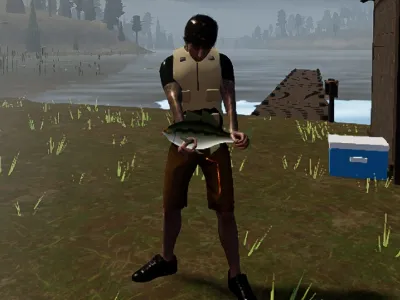
How to recognise a largemouth bass
The largemouth bass (Micropterus salmoides) is a green, deep-bodied fish with a dark horizontal stripe along its side and a very large mouth — the upper jaw extends well past the back of the eye. It is the most popular sport fish in North America, and typical fish weigh 0.5–2 kg, with trophies above 4 kg.
Where largemouth bass live
Largemouth like warmer, weedier water than smallmouth. Think shallow bays, ponds and the edges of lakes:
- Lily pads and weed beds. Bass sit underneath in the shade, waiting.
- Reeds, docks and overhanging trees.
- Fallen trees and brush piles.
They are ambush feeders: they let prey come to them and strike from cover.
When largemouth bass feed
Dawn and dusk are the classic times, when bass move to the edges of cover and look up for food. On hot, bright days they push deep into the thickest shade. A warm, overcast evening can be outstanding.
Best lures and baits for largemouth bass
- Weedless frogs worked over the top of lily pads and matted weed.
- Topwater poppers on calm water at first and last light.
- Soft plastic worms fished slowly through cover.
- Spinnerbaits and inline spinners along weed edges.
- Live worms or minnows under a float near the pads.
How to catch largemouth bass
- Fish the cover, not the open water. Cast into gaps in the pads and along the edge of the weed.
- Start on the surface early. Use a popper or frog at dawn; switch to slower lures as the sun climbs.
- Pause your lure. Let a surface lure sit still after it lands. Many bass hit it the moment it twitches again.
- Wait for the weight. On a frog, don't strike at the splash — wait until you feel the fish, then set the hook hard.
- Pull it out of the cover. Turn the fish's head quickly so it cannot dive back into the weed.
Handling largemouth bass
A largemouth can be held briefly by the lower lip; support heavier fish under the belly. Release quickly in the shallows.
Largemouth Bass in Survival Angler
- Where to look
- Weed beds, Sunken timber & rock, Shallows
- Depth
- 0.5–5 m (2–16 ft)
- Most active
- Dawn & Dusk
- Best baits
- Popper (surface lure), Live minnows, Worms & nightcrawlers
- Typical size
- 1.4 kg (3.1 lb)
- Trophy from
- 4.5 kg (9.9 lb)
- Float bite
- Plunges — the float is pulled hard under in one go. Strike fast — the window is short.
- How it fights
- Leaps clear of the water — keep the line tight when it jumps.
Numbers come straight from the game’s fish data, so the page and the lake always agree.
In Survival Angler, largemouth bass lurk in the weedy bays and under the lily pads, and they are most active at first and last light. A popper or rubber frog fished along the weed edge, or a worm under a float, will catch them. The bite is a hard plunge, and the fight is explosive near the surface — they jump, so keep the line tight.
Frequently asked questions
What is the best lure for largemouth bass?
Soft plastic worms and weedless frogs are the most versatile, because you can fish them right in the cover where bass live. Topwater poppers at dawn and dusk give the most exciting bites.
Where do largemouth bass hide?
In and under cover: lily pads, weed beds, reeds, docks and fallen trees, usually in shallow, warm, weedy water.
What time of day is best for bass fishing?
Early morning and evening are best, especially for surface lures. In the heat of the day bass retreat into the shade of thick cover or slightly deeper water.