
Fish species · Predator
Northern pike: how to find and catch them
The pike is the ambush hunter of cool northern lakes — long, fast and armed with a mouth full of teeth. Find the weed edge it waits on and it will come to you.
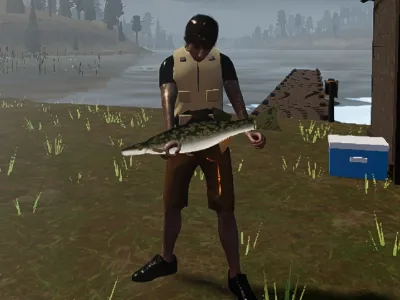
How to recognise a pike
A northern pike (Esox lucius) is built for one thing: a short, explosive lunge. The body is long and torpedo-shaped, the dorsal and anal fins sit far back near the tail, and the head ends in a flat, duck-bill jaw lined with sharp teeth.
The back is olive to dark green, fading to a cream belly, with rows of pale bean-shaped spots along the flanks. That pattern is camouflage: in a weed bed, a waiting pike looks like dappled light on stems. Most pike anglers catch are 1–5 kg; fish over 10 kg are rare and almost always females.
Where pike live
Pike like cool, clear-to-slightly-stained lakes and slow rivers with plenty of vegetation. They hunt by sight, so they hold where they can hide and see out:
- Weed edges. The boundary between a weed bed and open water is the classic pike spot. They sit just inside the stems and strike at anything that swims past.
- Drop-offs next to weed. Where a shallow weedy shelf falls away into deeper water, bigger pike patrol the edge.
- Sunken timber, reed lines and points. Anything that breaks up the outline of a waiting fish.
Seasons move them. In early spring pike spawn in very shallow, flooded vegetation; in summer the larger fish slide out to deeper, cooler edges; in autumn they come back shallow to feed hard before winter.
When pike feed
Pike are opportunists, but their best feeding windows are dawn and dusk, when low light gives an ambush hunter the edge. Overcast, breezy days are good all day long because the ruffled surface hides the angler and the lure. Bright, flat-calm afternoons are the hardest — on those days fish slower and deeper.
Best baits and lures for pike
| Bait or lure | When it shines |
|---|---|
| Live or dead baitfish | Cold water and pressured fish; the most reliable natural bait |
| Spoons | Covering water fast; a wobbling flash that pike can't ignore |
| Inline spinners | Shallow weed edges and smaller pike |
| Weedless frogs and topwater | Over thick weed at dawn and dusk — explosive takes |
| Jerkbaits and soft swimbaits | Clear water and bigger, wary fish |
Whatever you use, fish it along the edge, not in the middle of the open water. A lure that bumps the tops of the weed or runs parallel to the weed line passes more fish.
How to catch pike, step by step
- Find the edge. Look for the line where weed or lily pads give way to darker, deeper water.
- Fan-cast. Work along the edge with a cast every few metres, so the lure passes every possible ambush point.
- Vary the retrieve. A steady retrieve with an occasional pause or twitch triggers following pike. Many takes come right as the lure stops.
- Strike firmly. A pike's jaw is bony. When the rod loads up, set the hook with a firm sweep and keep the line tight.
- Let it run. Set the drag so a big fish can take line on its first run instead of snapping you off.
Handling and releasing pike
Pike look tough, but they are easily damaged. Always use a wire trace, carry long-nosed pliers, and unhook the fish on a wet mat or in the water. Support the body under the belly — never lift a big pike by the jaw alone or hold it by the eyes. A quick, careful release lets the big females survive to spawn again.
Northern Pike in Survival Angler
- Where to look
- Weed beds, Sunken timber & rock, Drop-offs
- Depth
- 0.5–6 m (2–20 ft)
- Most active
- Dawn & Dusk
- Best baits
- Live minnows, Rubber frog, Popper (surface lure)
- Typical size
- 2.6 kg (5.7 lb)
- Trophy from
- 9 kg (20 lb)
- Float bite
- Plunges — the float is pulled hard under in one go. Strike fast — the window is short.
- How it fights
- Long, powerful runs — let the drag work and keep the rod up.
Numbers come straight from the game’s fish data, so the page and the lake always agree.
In Survival Angler, pike live on the weed beds and timber of most lakes and feed hardest in the first and last light. A live minnow under a float or a rubber frog skimmed over the weed is the best way in. The bite is a plunge — the float is dragged straight under — and your strike window is shorter than for any other fish, so be ready. Expect a long first run: set the drag so the line does not snap.
Old Mossback, the legend of the drop-off
Locals say a pike longer than a canoe paddle haunts the drop-offs at dawn and dusk. Old Mossback only takes a live minnow or a big lure, and fights for far longer than any ordinary fish. Anglers who land her and let her go earn a legend's respect.
Frequently asked questions
What is the best bait for pike?
Live or dead baitfish are the most reliable natural baits. Of the lures, spoons, inline spinners, jerkbaits and weedless frogs all catch well. Fish them along weed edges at dawn and dusk.
What time of day do pike bite best?
Pike feed hardest in low light — the first and last hours of the day — and during overcast, windy weather. They will take a lure in the middle of the day, but you usually have to put it right in front of them.
Do you need a wire leader for pike?
Yes. A pike's teeth cut through ordinary monofilament and braid. Use a wire or heavy fluorocarbon trace of at least 30 cm so a hooked fish cannot bite through the line.