
Fish species · Predator
Walleye: the low-light hunter of the drop-offs
Walleye see better in dim light than the fish they hunt. Learn to fish when the light goes and where the bottom drops away, and you will start catching them.
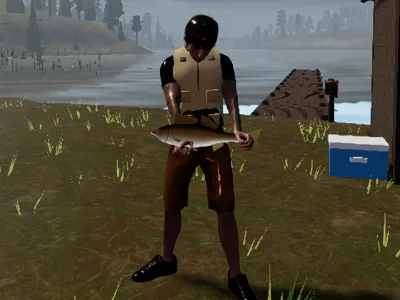
How to recognise a walleye
The walleye (Sander vitreus) is a slim, olive-gold member of the perch family with large, glassy eyes that seem to glow when light hits them. It has two dorsal fins — the first spiny — a white tip on the lower lobe of the tail, and a mouth full of sharp, fang-like teeth. Most walleye caught weigh 0.5–2 kg.
Those eyes are the key to the whole fish. A reflective layer behind the retina gathers light, giving walleye excellent vision at dusk, at night and in murky water — and making them shy of bright sun.
Where walleye live
Walleye are fish of large, cool lakes and big rivers. They are bottom-oriented and like hard ground:
- Drop-offs and breaklines, where a shallow shelf falls into deep water.
- Rocky points and gravel humps that rise from deeper water.
- Weed edges next to deep water, especially in summer.
During bright days they drop deeper or tuck into shade. As the light fades they move up the slope onto shallower ground to hunt.
When walleye feed
Dusk and the first hours of darkness are prime time, followed by dawn. A dull, windy day can produce bites all day, because a choppy surface cuts the light. Calm, sunny middays are slow — fish deep and slowly if you have to fish then.
Best baits for walleye
- Jig and minnow. A light jig head with a live minnow, hopped slowly along the bottom.
- Nightcrawlers. On a jig or behind a spinner rig, dragged slowly.
- Crankbaits. Slim, shallow-diving lures retrieved slowly over the edge at night.
- Spoons. Jigged vertically over deep holding spots.
How to catch walleye
- Find the edge. Locate where the bottom drops from shallow to deep. That line is where walleye travel.
- Fish at the right time. Plan your session around the last hour of daylight and the first hours of night.
- Stay near the bottom. Keep the bait within a foot of the bottom; walleye rarely chase far upward.
- Slow down. A slow, steady presentation beats a fast one almost every time.
- Watch for the subtle take. Walleye often bite lightly — a tick, a weight on the line, or a float that trembles. Wait a moment for the fish to take it properly, then strike.
Handling walleye
Walleye have sharp teeth and spiny fins. Hold them firmly behind the head, use pliers to unhook, and return them quickly. Fish caught from deep water should be brought up steadily rather than cranked to the surface.
Walleye in Survival Angler
- Where to look
- Drop-offs, Deep basin, Sunken timber & rock
- Depth
- 2–12 m (7–39 ft)
- Most active
- Dusk & Dawn
- Best baits
- Live minnows, Rubber frog, Popper (surface lure)
- Typical size
- 1.4 kg (3.1 lb)
- Trophy from
- 5 kg (11 lb)
- Float bite
- Trembles — the float shivers and slowly sinks. Wait for it to commit, then strike.
- How it fights
- Dives for the bottom — lift and gain line between dives.
Numbers come straight from the game’s fish data, so the page and the lake always agree.
In Survival Angler, walleye hold on the drop-offs and come alive from dusk into the night. A live minnow fished deep on a float is the most reliable bait. Their bite is a tremble: the float shivers and slowly sinks. Don't strike on the first shiver — wait until the float commits, then set the hook. Walleye dive for the bottom when hooked, so lift steadily and win line back between dives.
Frequently asked questions
Why do walleye bite better at night?
Walleye have a reflective layer in their eyes (the tapetum lucidum) that lets them see in very low light. At dusk and after dark they can hunt baitfish that cannot see them coming, so that is when they move up to feed.
What depth are walleye at?
Usually close to the bottom on drop-offs, points and rocky humps, from a couple of metres down to 10 m or more in summer. At dusk they often move up onto the shallower edge to feed.
What is the best bait for walleye?
A jig tipped with a live minnow or a nightcrawler, fished slowly along the bottom, is the classic walleye presentation. At night, shallow-running crankbaits retrieved slowly over the edge are very effective.