
Fish species · Trout & char
Lake trout: the giant of the cold, deep basin
Lake trout live where few other fish can — in the cold, dark water at the bottom of deep lakes. Reach them there, or catch them when they come up to the shallows in spring and autumn.
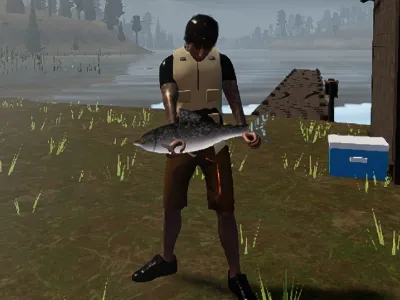
How to recognise a lake trout
The lake trout (Salvelinus namaycush) is the largest North American char. It has a long, streamlined body, a deeply forked tail, and a grey-green to dark-olive back covered in pale, irregular spots. Like other char, it has light spots on a dark body. Typical fish weigh 1–4 kg, but lake trout are long-lived and can grow far larger.
Where lake trout live
Lake trout are fish of big, deep, cold, clear lakes. They need cold water with plenty of oxygen, which shapes everything about where they are:
- Summer: deep in the main basin, often near the bottom or suspended at the depth where the water stays cold.
- Spring, just after ice-out: shallow, near the surface and along the shore while the whole lake is still cold.
- Autumn: back over rocky shoals and reefs to spawn.
When lake trout feed
Because they live where light barely reaches, lake trout bite fairly evenly through the day. In spring and autumn the first light of the morning is especially good, when they come up to chase baitfish in the shallows.
Best baits and lures for lake trout
- Spoons — trolled deep or jigged vertically over deep fish. A flash of silver imitates their favourite prey.
- Large minnow lures and swimbaits.
- Live or dead baitfish, fished near the bottom.
- Tube jigs worked over deep structure.
How to catch lake trout
- Find the depth. In warm months, fish the deepest water you can reach. In cold months, try the shallows first.
- Cast far. From shore, a long cast over the deepest water you can reach gives you the best chance.
- Let it sink. Count your lure down to the bottom before retrieving.
- Fish slowly. Lake trout follow a lure a long way; a slow, steady retrieve with pauses draws strikes.
- Be patient on the fight. Lake trout bore deep and stay deep. Steady pressure wins.
Handling lake trout
Fish brought up from deep water are stressed. Bring them up steadily, unhook them quickly in the water if you can, and hold them upright until they swim away strongly.
Lake Trout in Survival Angler
- Where to look
- Deep basin
- Depth
- 7–14 m (23–46 ft)
- Most active
- Daytime & Dawn
- Best baits
- Rubber frog, Live minnows
- Typical size
- 2.5 kg (5.5 lb)
- Trophy from
- 8 kg (18 lb)
- Float bite
- Plunges — the float is pulled hard under in one go. Strike fast — the window is short.
- How it fights
- Dives for the bottom — lift and gain line between dives.
Numbers come straight from the game’s fish data, so the page and the lake always agree.
In Survival Angler, lake trout live in the cold, deep basin of the bigger lakes. Cast as far as you can over the deepest water, and fish a live minnow or a lure deep. At first light they sometimes rise to a frog. The bite is a plunge — the float is dragged under hard — and the fight is a long, deep dive, so a reel with plenty of line and a well-set drag matter. A boat helps you reach the deepest water.
Frequently asked questions
How deep are lake trout?
In summer, lake trout often hold 15 m or deeper, where the water stays cold. In early spring and late autumn they come much shallower, sometimes within casting range of the shore.
What lure is best for lake trout?
Spoons are the classic lake trout lure, either trolled deep or jigged vertically. Large minnow-imitating lures and live or dead baitfish also work well.
How old can lake trout get?
Lake trout grow slowly in cold water and can live for decades. Big fish are old fish, which is why many anglers release the large ones.