
Fish species · Cold-water schooling fish
Lake whitefish: silver schools of the deep basin
Lake whitefish are a quiet favourite of cold-water anglers: they school deep, take small baits delicately, and fight much better than their size suggests.
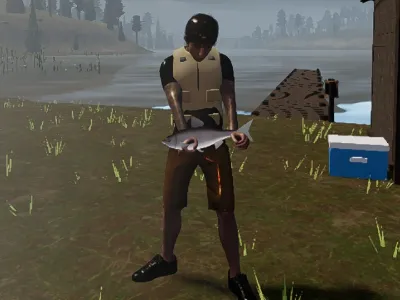
How to recognise a lake whitefish
The lake whitefish (Coregonus clupeaformis) is a silvery, streamlined fish with a small head, a small, slightly overhanging snout and a forked tail. Like trout and char it has a small fleshy adipose fin on its back near the tail. Bigger fish develop a noticeable hump behind the head. Most weigh 0.5–1.5 kg.
Where lake whitefish live
Whitefish are fish of large, cold, clear lakes. They live in schools and follow the cold water through the year:
- Deep basin and open water in summer.
- Over soft bottoms where they feed on larvae and small shellfish.
- Shallower water in autumn, when they move up to spawn over gravel and rock, and in winter under the ice.
When lake whitefish feed
Whitefish feed fairly steadily through the day because they live in deep, dim water. Low light can bring them a little shallower, and the colder months are when many anglers target them — whitefish are a classic ice-fishing species.
Best baits for lake whitefish
- Small worms or pieces of worm fished deep.
- Maggots and small grubs.
- Small jigs and flies that imitate larvae.
- Small spoons, jigged gently near the bottom.
Keep it all small. A whitefish's mouth is tiny compared with a trout's.
How to catch lake whitefish
- Fish deep. Reach the deep basin, or the deep edge closest to the bank.
- Find the school. Where you catch one, keep fishing — the school is usually nearby.
- Use light tackle and small hooks.
- Watch for delicate bites. A whitefish bite can be a tiny tremble or a slow sink of the float.
- Play it gently. Use a soft drag and steady pressure. Avoid hard strikes and rough handling of the fish near the bank.
Handling lake whitefish
Whitefish have soft mouths and delicate scales. Net them rather than lifting them by the line, unhook quickly, and release them gently into the water.
Lake Whitefish in Survival Angler
- Where to look
- Deep basin, Open water
- Depth
- 4–14 m (13–46 ft)
- Most active
- Dusk
- Best baits
- Worms & nightcrawlers
- Typical size
- 0.9 kg (2.0 lb)
- Trophy from
- 2.5 kg (5.5 lb)
- Float bite
- Trembles — the float shivers and slowly sinks. Wait for it to commit, then strike.
- How it fights
- Dives for the bottom — lift and gain line between dives.
Numbers come straight from the game’s fish data, so the page and the lake always agree.
In Survival Angler, lake whitefish school in the deep basin and open water of the bigger lakes. A worm fished deep is the best bait. The bite is a tremble — the float shivers and slowly sinks — so wait for it to commit before you strike. They dive when hooked; keep steady, gentle pressure.
Frequently asked questions
What do lake whitefish eat?
Mostly small invertebrates: insect larvae, small snails, freshwater shrimp and zooplankton. That is why small baits catch far more whitefish than big ones.
How deep do whitefish live?
They usually school in the cool, deep parts of a lake — often several metres down and deeper in summer — moving shallower in the colder months.
Why do whitefish come off the hook?
Whitefish have soft, small mouths. A hard strike or too much pressure can tear the hook free. Strike gently and play them with a light touch.