
Fish species · Trout & char
Brook trout: jewel of cold, moving water
Brook trout are among the most beautiful freshwater fish — and among the fussiest about where they live. Find cold, clean, moving water and you are halfway there.
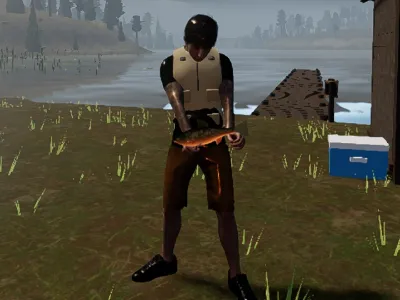
How to recognise a brook trout
The brook trout (Salvelinus fontinalis) is a char, not a true trout. Its back is dark olive covered in pale, worm-like markings called vermiculations. The flanks carry yellow spots and small red spots ringed in blue, and in autumn the belly turns orange-red. The lower fins have a crisp white leading edge followed by a black stripe — the easiest giveaway.
Most brook trout are small: 100–500 g is typical, and a fish over 1.5 kg is a real trophy.
Where brook trout live
Brook trout need cold, clean, well-oxygenated water. They do best below roughly 20 °C and struggle when water warms. In streams they hold behind rocks, under undercut banks and at the head of pools. In lakes they gather where cold water enters:
- Creek mouths and inlets, where a stream carries cold water and food into the lake.
- Spring-fed areas and shaded shallows.
- Gravel bottoms, which they also use for spawning in autumn.
When brook trout feed
Brook trout feed most actively at dawn and dusk, when insects hatch and light is low. Cloudy days and light rain can keep them feeding all day. On hot, bright afternoons they retreat to the coldest, deepest or most shaded water.
Best baits and lures for brook trout
- Worms drifted naturally with the current — the simplest and most reliable bait.
- Small inline spinners (size 0–1), especially with gold or red.
- Small spoons in clear water.
- Flies — nymphs and small dry flies for fly anglers.
- Sweetcorn where it is allowed; stocked trout in particular take it readily.
How to catch brook trout
- Go to the cold water. In a lake, start right at the creek mouth.
- Stay hidden. Brook trout in clear water are spooky. Approach low and avoid casting a shadow on the water.
- Let the current work. Cast upstream or across and let the bait drift naturally into the inlet.
- Keep everything small. Light line, small hooks and small lures get more bites.
- Strike quickly. Trout spit a bait fast once they feel resistance.
Handling brook trout
Trout are delicate. Wet your hands, keep the fish in or close to the water and unhook it quickly. Avoid squeezing — their organs are easily damaged.
Brook Trout in Survival Angler
- Where to look
- Creek mouths
- Depth
- 0.2–3 m (1–10 ft)
- Most active
- Dawn & Dusk
- Best baits
- Worms & nightcrawlers, Popper (surface lure)
- Typical size
- 0.4 kg (0.9 lb)
- Trophy from
- 1.5 kg (3.3 lb)
- Float bite
- Dips — the float bobs, then dips under. Strike as it goes down.
- How it fights
- Leaps clear of the water — keep the line tight when it jumps.
Numbers come straight from the game’s fish data, so the page and the lake always agree.
In Survival Angler, brook trout live almost only around the creek mouths, where cold water runs into the lakes — fish elsewhere and you will rarely see one. A worm under a float at the inlet is the easiest way, and a popper or small lure works too. The bite is a quick dip. Once hooked, brook trout jump, so keep the line tight.
Frequently asked questions
Is a brook trout a trout?
Not technically. Brook trout belong to the char group (Salvelinus), along with lake trout and Arctic char. Char have light spots on a dark body, while true trout have dark spots on a lighter body.
Where do you find brook trout in a lake?
Near cold inflows: creek mouths, springs and shaded inlets where fresh, oxygen-rich water enters. In warm weather they rarely stray far from that cooler water.
What is the best bait for brook trout?
Worms drifted naturally in the current, small inline spinners and small spoons all catch brook trout. Keep tackle light and baits small.