
Fishing guide · Rigs
Slip bobber rig: setup, depth and when to use one
A fixed bobber is fine in three feet of water. Try to cast one set at ten feet and you will see the problem. A slip bobber slides on the line, so it casts like a short rig and fishes as deep as you like.
The parts, in order
From the rod tip down, thread them on the line like this:
- Bobber stop. A small knot of thread or a rubber stop. It slides when you push it and grips when you do not, and it is small enough to go through the rod guides.
- Bead. A small plastic bead that keeps the stop from pulling into the bobber.
- Slip bobber. The line runs freely through it.
- Weight. One or two split shot, or a small egg sinker, enough to stand the bobber up with just the tip showing.
- Hook or small jig. Twelve to eighteen inches below the weight for live bait. A 1/32 to 1/16 ounce jig can be the weight and the hook in one.
When you cast, everything slides down to the weight and the rig flies as one compact piece. On the water the bait sinks, pulling line through the bobber until the stop reaches the bead. That is your depth.
How deep to set a bobber
There is no single number, because the right depth is where the fish are, not how deep the lake is. These are sensible starting points.
| Fish | Start here | Why |
|---|---|---|
| Crappie | About a foot above the brush or the fish | They look up to feed |
| Bluegill | 2 to 4 feet, or just above the weed | They stay shallow in warm weather |
| Walleye | 6 to 12 inches off the bottom | They hold low and rarely chase far upward |
| Perch | 6 to 12 inches off the bottom | They feed low, in schools |
| Bullhead and channel catfish | On the bottom, or just touching it | They hunt by smell on the bottom |
| Pike | Halfway down, or above the weed tops | They strike upward out of cover |
To measure depth without electronics, clip a heavier weight to the hook and drop it in. If the weight pulls the bobber under, the rig is too shallow to reach the bottom. If the bobber lies flat, it is too deep. Move the stop until the bobber just stands, then take off the weight and set your bait above that mark.
Finding the depth when you have no idea
- Start halfway between the surface and the bottom.
- Give it ten minutes.
- Move the stop a foot deeper and try again. Then another foot.
- When you get a bite, leave the depth alone and cast to the same place.
Two anglers can split the work: one starts shallow and the other deep, and whoever gets the first fish has found the answer for both.
Fixed or slip?
Use a fixed bobber when the depth is shorter than your rod. It is simpler, and it lifts the hook a little faster on the strike.
Use a slip bobber when you fish deeper than about five feet, when you cast from the bank into deeper water, when trees behind you leave no room for a long cast, or when you change depth often.
Mistakes that cost fish
- Too much bobber. A big round bobber needs a hard pull to go under, and fish feel it. Use the smallest one you can see and cast.
- Too little weight. The bait drifts up and the bobber lies over.
- Slack line. You have to reel down to a tight line before you set the hook, and by then the fish is gone.
- Striking at the first twitch. Wait for the bobber to go down, slide away or lie flat. Our guide to reading a float covers all five bites.
Practise it
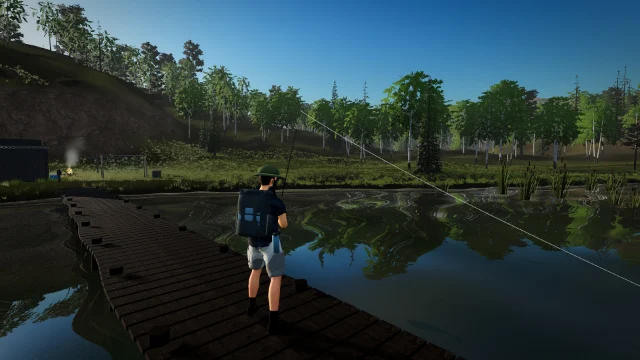
In Survival Angler the float rig has an adjustable depth. Press Z to set the bait shallower and X for deeper, ten centimetres (about four inches) at a time, or hold Shift for bigger steps. The panel shows both the depth of the water and the depth of your bait. Black crappie around sunken timber at dusk are a good test. New to all of this? Start with float fishing for beginners.
Sources
- FishUSA: Crappie fishing with slip floats
- Lurenet: Use a slip float to catch more crappie
Frequently asked questions
How deep should I set a bobber for crappie?
Start about a foot above the cover or the fish. Crappie feed upward, so a bait just above them gets eaten and a bait below them is often ignored. If you cannot see the fish, start halfway down and move a foot at a time.
What is the bead for on a slip bobber?
It stops the bobber stop from being pulled into the hole in the bobber. Without a bead the knot can jam inside or slip straight through, and your depth changes without you noticing.
Is a bobber the same as a float?
Yes. Anglers in the United States and Canada mostly say bobber, anglers in Britain and Ireland say float. A slip bobber is the same thing as a sliding float.
Why does my slip bobber lie on its side?
Either there is not enough weight below it to stand it up, or the bait is lying on the bottom. Add a split shot first. If it still lies flat, make the rig shallower.