
Fishing guide · Identification
Warmouth vs rock bass, green sunfish and bluegill
A chunky little panfish with a big mouth and reddish eyes. Half the people on the dock call it a goggle-eye and the other half say rock bass. One count settles most arguments.
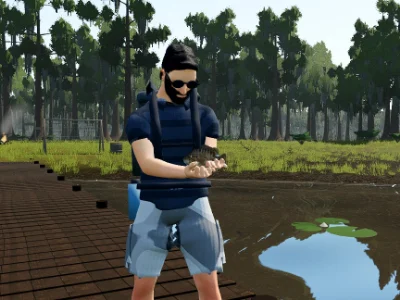
The quick answer
| Warmouth | Rock bass | Green sunfish | Bluegill | |
|---|---|---|---|---|
| Anal fin spines | 3 | 5 or more, usually 6 | 3 | 3 |
| Mouth | Large, to below the eye | Large, to below the eye | Fairly large | Small |
| Eye | Reddish, dark lines fan out behind it | Bright red | Not red | Dark |
| Side pattern | Mottled brown and olive | Rows of dark spots | Green, wavy blue-green lines on the cheek | Dark bars, dark ear flap |
| Teeth on the tongue | Yes, a small patch | Guides disagree | Rarely | No |
| Typical place | Swamps, stumps, muddy weed | Rocks, clear streams and lakes | Almost anywhere | Weedy ponds and lakes |
Count the anal spines
The anal fin is the one underneath, between the vent and the tail. Its front edge has stiff spines you can feel with a wet thumb. Three means warmouth, green sunfish or bluegill. Five or more means rock bass.
This is the check to trust. You will see the tongue test quoted as the one certain sign of a warmouth, but state guides disagree about whether rock bass have tongue teeth too, so use it to separate warmouth from green sunfish and not from rock bass.
Look at the mouth
Open it. A bluegill's mouth is tiny, made for insects. The other three can take a small crayfish or a minnow, which is why they keep turning up on bass lures.
Then the eye and cheek
A warmouth has a reddish eye with dark streaks running back across the cheek, like war paint. A rock bass has a bright red eye and no streaks to speak of. A green sunfish has wavy turquoise lines on the cheek.
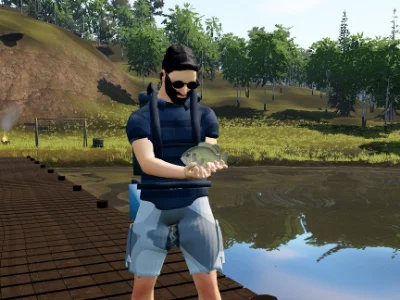
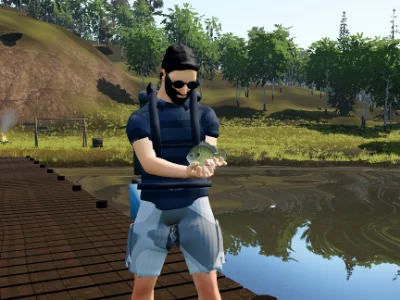
The water tells you a lot
- Stumps, roots, lily pads and tea-coloured water: expect warmouth.
- Rocks, gravel and clear water, with smallmouth around: expect rock bass.
- A farm pond or a warm ditch: expect green sunfish.
- A weed bed on a sunny afternoon with a dozen fish in it: expect bluegill.
Do they fish differently?
| In Survival Angler | Warmouth | Rock bass | Bluegill |
|---|---|---|---|
| Map | Southern Bayou | Northwoods Lakes | Both |
| Depth | 1 to 8 ft | 2 to 16 ft | 1 to 13 ft |
| First-choice bait | Worms | Live crawfish | Worms |
| Best time | Dusk, then dawn | Dusk, then dawn | Daytime |
| Trophy from | 0.45 kg (1 lb) | 0.8 kg (1.8 lb) | 0.6 kg (1.3 lb) |
All three take a worm under a small bobber. The difference is where you put it: inside the stumps for warmouth, tight to the rocks for rock bass, along the weed for bluegill. Green sunfish are not in the game.
Sources
Frequently asked questions
How do you tell a warmouth from a rock bass?
Count the spines at the front of the anal fin. A warmouth has three. A rock bass has five or more, usually six.
How do you tell a warmouth from a green sunfish?
Both have three anal spines and a fairly big mouth. A warmouth has dark lines fanning back from a reddish eye and normally a small patch of teeth on its tongue. A green sunfish has wavy blue-green lines on its cheek and usually no teeth on the tongue.
Is a warmouth a bass?
No. Warmouth are sunfish, in the same genus as bluegill (Lepomis). Local names such as warmouth bass and goggle-eye cause most of the confusion.
Are warmouth good to eat?
Yes, they are eaten like other panfish. Fish from clean water taste better than fish from a stagnant, muddy pool.