
Fish species · Panfish
Bluegill: the feisty sunfish of warm shallows
Bluegill are small, bold and everywhere warm and weedy. A worm under a float in the sunshine catches them all day, and they pull harder for their size than almost anything else.
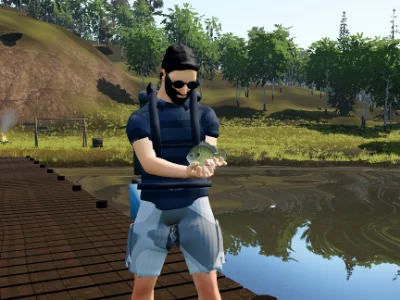
How to recognise a bluegill
The bluegill (Lepomis macrochirus) is a flat, round sunfish with olive-green sides, faint vertical bars, a solid dark-blue to black flap at the back of the gill cover and a dark spot at the base of the rear dorsal fin. Breeding males have an orange or copper chest. Most bluegill weigh 100–250 g; anything over half a kilo is a trophy.
Where bluegill live
Bluegill like warm, clear, weedy water:
- Weed beds and lily pads in the shallows.
- Docks, fallen trees and brush, where they shelter from predators.
- Small lakes and ponds, where they can be the most common fish.
When bluegill feed
Bluegill are daytime fish. They bite from mid-morning through the afternoon, especially in sunshine, and go quiet after dark.
Best baits for bluegill
- Worms, a small piece on a small hook.
- Crickets and mealworms.
- Tiny jigs, fished slowly.
- Small inline spinners, retrieved past cover.
How to catch bluegill
- Go small. Bluegill have tiny mouths — use a small hook and a small bait.
- Fish shallow near cover. Set the bait a metre or so under the float, close to weed or wood.
- Strike the dip. Bluegill peck at a bait, then pull the float under. Strike as it goes down.
- Mind the spines. Smooth the dorsal fin down with your hand before you hold one.
Bluegill in Survival Angler
- Found on
- Northwoods Lakes & Southern Bayou & Frostbound Lakes
- Where to look
- Shallows, Weed beds, Sunken timber & rock
- Depth
- 0.3–4 m (1–13 ft)
- Most active
- Daytime & Dawn
- Best baits
- Worms & nightcrawlers,
- Typical size
- 0.1 kg (0.3 lb)
- Trophy from
- 0.6 kg (1.3 lb)
- Float (bobber) bite
- Dips — the float bobs, then dips under. Strike as it goes down.
- How it fights
- Head-shaking and thrashing close in — keep steady pressure.
Numbers come straight from the game’s fish data, so the page and the lake always agree.
In Survival Angler, bluegill live in the ponds and smaller lakes of both maps — the Northwoods and the Southern Bayou. A worm under a float in the sunny shallows is all it takes, and a small inline spinner or soft jig works too. Their bite is a quick dip. For their size they thrash hard on the line, so keep a steady bend in the rod.
Frequently asked questions
What is the best bait for bluegill?
A small piece of worm on a small hook under a float is the classic bluegill rig. Crickets, mealworms, small jigs and little inline spinners also work well.
Where do bluegill hide?
In warm, shallow water close to cover: weed beds, lily pads, fallen trees and dock pilings. In late spring they gather in colonies of round nests in shallow water.
How do you tell a bluegill from other sunfish?
A bluegill has a solid dark flap at the back of the gill cover (the 'ear'), a dark spot at the rear of the soft dorsal fin and faint vertical bars. Redear sunfish have a red or orange edge on the ear flap.