
Fishing guide · Technique
Lure fishing basics: how to catch predators on lures
Lure fishing is active, mobile and exciting: instead of waiting for fish to find your bait, you go and find them. All you need is a rod, a few lures and a plan.
How lures work
A lure is an artificial bait that imitates prey through movement, flash and vibration. A spinner's blade flashes and thumps like a fleeing baitfish; a spoon wobbles; a popper splashes like an insect or a frog on the surface. Predators strike out of hunger, aggression or curiosity — and a lure is only convincing while it is moving.
That is the big difference from float fishing: with a lure, you are the one making the bait come alive.
The four lures every beginner should know
Inline spinners
A blade spins around a wire shaft as you retrieve. Easy to use, very effective for perch, trout, bass and pike. Choose silver on bright days and gold or copper in coloured water.
Spoons
A curved metal blade that wobbles and flashes. Spoons cast a long way and work at any depth — great for pike and lake trout, and for covering a lot of water fast.
Poppers and topwater lures
They float, and each twitch of the rod makes them pop and splash on the surface. Perfect for bass and perch on calm mornings and evenings. Watching a fish smash a lure on the surface is unforgettable.
Weedless frogs
Soft, hollow frogs with upturned hooks that slide over lily pads and matted weed without snagging. They let you fish the thick cover where big pike and bass wait.
Where to cast
Predators ambush from cover. Cast to:
- Weed edges and gaps in lily pads.
- Sunken timber, rocks and drop-offs.
- Points and corners of the bank.
- Where you see fish activity — scattering baitfish or swirls.
Fan your casts: cast along the edge, then a few metres further, so your lure passes as many hiding fish as possible.
Retrieve styles that trigger strikes
- Steady retrieve. A constant speed — the simplest and often the best with spinners.
- Stop and go. Wind, pause, wind. The pause makes the lure flutter or rise, and many fish hit right as it stops.
- Twitching. Sharp flicks of the rod tip make the lure dart erratically, like injured prey.
- Surface walking. Small twitches on slack line make a popper splash and wander.
If fish follow but don't bite, change something: speed, pauses, depth or lure.
Setting the hook
When a fish hits a lure, it is usually a solid, sudden pull. Strike firmly — sweep the rod back and keep winding so there is no slack. With surface frogs, wait until you feel the weight of the fish before striking; striking at the splash pulls the lure away.
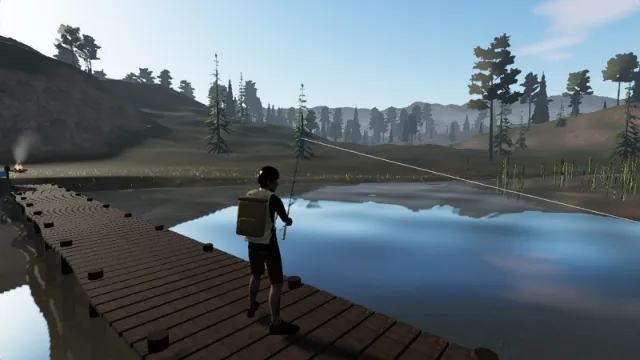
Lure fishing in Survival Angler
The spinning rods in Survival Angler fish exactly this way, with two lures: the popper, an all-day surface lure for perch and bass, and the rubber frog, a weedless frog for big pike and bass over the weed at dawn and dusk. A lure lasts many fish: it wears out after about 100–120 casts (blunt hooks) or goes with a snapped line — check it in the Workshop at any trading post.
- Cast far (up to 60 m) along weed edges, sunken timber and drop-offs.
- Retrieve by holding the left mouse button for a steady pull, or rolling the wheel — faster roll, faster lure. Short bursts with pauses make the lure stop and wobble like a hurt frog. Fish only hit a moving lure.
- Strike: when the water explodes and "STRIKE!" appears, keep holding the button and yank the mouse for a solid hookset.
- Fight and land the fish like on the float rod: wind on the wheel, give line when the tension bar turns red.
Frequently asked questions
What is the best lure for beginners?
An inline spinner. It is easy to cast, works with a simple steady retrieve and catches perch, pike, bass and trout. Add a spoon and a surface popper and you can cover most situations.
Why are fish following my lure but not biting?
Followers often need a change of pace. Try a pause, a sharp twitch or a speed-up just as the lure approaches the bank. Many strikes come right when the lure changes direction or stops.
How fast should I reel a lure?
Start with a steady, medium speed, then experiment. Cold water and inactive fish usually need slower retrieves; warm water and aggressive fish respond to faster, more erratic movement.