
Fish species · Panfish
White crappie: the paper-mouthed fish of the brush piles
White crappie gather around sunken timber and brush, sip small minnows and come alive at dusk. Their mouths are soft, so a gentle hand lands more of them.
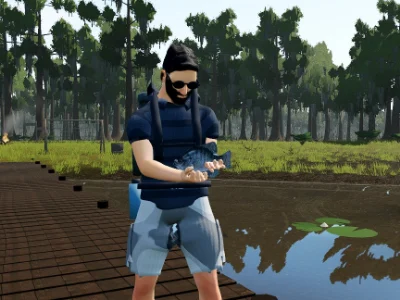
How to recognise a white crappie
The white crappie (Pomoxis annularis) is a flat, silvery fish with a large mouth and faint dark bars down its sides. Its dorsal fin sits well back on the body and the back rises steeply behind the head. Most fish weigh 200–500 g; a kilogram fish is a trophy.
Black crappie share many of the same lakes. Count the dorsal spines, or see black crappie vs white crappie.
Where white crappie live
White crappie cope well with murky, warm water and love cover:
- Sunken timber, stumps and brush piles.
- Weed edges and the shade of overhanging trees.
- Drop-offs next to cover in the middle of the day.
They gather in loose groups, so a good brush pile can hold many fish.
When white crappie feed
Crappie are low-light feeders. Dusk is the best time, then dawn, and they keep feeding after dark more than most panfish. On bright middays they sit deep inside the cover.
Best lures and baits for white crappie
- Small live minnows under a float or a slip bobber — the number-one crappie bait.
- Small soft-plastic jigs fished slowly near the timber.
- Inline spinners retrieved slowly past the cover.
- Worms catch them too, though less reliably.
How to catch white crappie
- Fish tight to the cover. Drop the bait next to the stump or branch, not in open water beside it.
- Set the depth carefully. Crappie look up to feed, so keep the bait just above them.
- Watch the float closely. A crappie often lifts the bait rather than pulling it under.
- Play them gently. Steady pressure — a hard strike can tear the hook out.
Handling white crappie
Hold them gently with a wet hand around the body and unhook with care: the thin mouth tears easily.
White Crappie in Survival Angler
- Found on
- Southern Bayou
- Where to look
- Sunken timber & rock, Weed beds, Drop-offs
- Depth
- 0.6–4 m (2–13 ft)
- Most active
- Dusk & Dawn
- Best baits
- Live minnows, Soft-plastic jig, Popper (surface lure)
- Typical size
- 0.3 kg (0.8 lb)
- Trophy from
- 1 kg (2.2 lb)
- Float (bobber) bite
- Lifts and lies flat — the float rises and falls flat as the fish lifts the shot. Strike straight away.
- How it fights
- Head-shaking and thrashing close in — keep steady pressure.
Numbers come straight from the game’s fish data, so the page and the lake always agree.
In Survival Angler, white crappie live in the Southern Bayou around sunken timber and weed. A live minnow or a soft-plastic jig near cover is the best approach, especially at dusk. The bite is a classic lift: the float rises and lies flat as the fish lifts the shot — strike straight away.
Frequently asked questions
How do you tell white crappie from black crappie?
White crappie have dark spots arranged in vertical bars and usually five or six spines in the dorsal fin. Black crappie are speckled all over without clear bars and usually have seven or eight dorsal spines.
What is the best bait for white crappie?
Small live minnows fished near cover are the classic bait. Small soft-plastic jigs work almost as well.
Why do crappie come off the hook?
Their mouth membrane is thin — hence the nickname “papermouth”. Set the hook gently and do not horse them in.