
Fish species · Predator
Alligator gar: the giant of the bayou
With a broad, toothy snout and armoured scales, the alligator gar is one of the largest freshwater fish on Earth. Hooking one is easy compared with landing it.
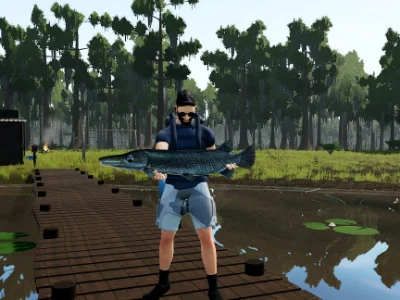
How to recognise an alligator gar
The alligator gar (Atractosteus spatula) has a long, heavy, torpedo-shaped body covered in hard, enamel-coated scales, and a short, broad snout with two rows of fangs in the upper jaw. It is olive-brown on top and pale below. Typical adults weigh 5–15 kg; real giants are much larger.
Where alligator gar live
They like big, slow water:
- Open water of large lakes, bayous and backwaters.
- Creek and channel mouths.
- Drop-offs next to shallow feeding flats.
They often cruise slowly near the surface, rolling to gulp air.
When alligator gar feed
They feed at any hour but are most active around dusk and in warm weather.
Best baits for alligator gar
- Big live or fresh baitfish — the standard method.
- Large spoons and crankbaits occasionally tempt a fish.
How to catch alligator gar
- Use heavy tackle. Strong line, a stout rod and a big hook.
- Fish big baits near the surface or mid-water where gar cruise.
- Let it run. A gar often swims off with the bait before swallowing; strike when it moves off a second time.
- Expect a long fight. Long, powerful runs and head-shakes at the net.
Handling alligator gar
Treat a big gar like a big animal: support its weight, keep hands clear of the teeth and release it carefully.
Alligator Gar in Survival Angler
- Found on
- Southern Bayou
- Where to look
- Open water, Creek mouths, Drop-offs
- Depth
- 0.6–5 m (2–16 ft)
- Most active
- Dusk
- Best baits
- Live minnows
- Typical size
- 9 kg (20 lb)
- Trophy from
- 22 kg (49 lb)
- Float (bobber) bite
- Slides away — the float glides off across the surface. Strike once it is moving steadily.
- How it fights
- Long, powerful runs — let the drag work and keep the rod up.
Numbers come straight from the game’s fish data, so the page and the lake always agree.
In Survival Angler, alligator gar live in the Southern Bayou’s open water and channel mouths. They take a big live minnow, and you will need your strongest rod — a light rod is simply overpowered. The float slides away and then comes a series of long, heavy runs.
Sources
- Texas Parks and Wildlife: Are alligator gar safe to eat?
Frequently asked questions
Are alligator gar eggs poisonous?
Yes. Texas Parks and Wildlife says the eggs are toxic and can make you ill if eaten. The meat can be eaten, subject to local consumption advisories.
What do alligator gar eat?
Mostly rough fish, alive or dead. Texas Parks and Wildlife lists carp, gizzard shad, buffalo, tilapia and freshwater drum as the most common food. Sport fish are a small part of the diet.
How big do alligator gar get?
They regularly reach 20–40 kg and the largest ever recorded weighed well over 100 kg.
How is an alligator gar different from other gars?
Its snout is short and broad — like an alligator’s — with two rows of large teeth in the upper jaw. Other gars have narrow, needle-like snouts.
What tackle do you need for alligator gar?
Heavy line, a strong rod and big baits. A light rod will simply be overpowered.