
Fishing guide · The fight
How to land a big fish without losing it
Most big fish are lost in the fight, not at the bite. A well-set drag, a bent rod and a calm head will bring in fish far heavier than your line's breaking strain.
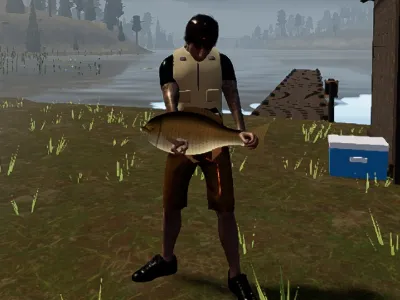
The three tools of the fight
Landing a big fish is about using three things together:
- The drag — the clutch on your reel that lets line slip when the pull is too strong.
- The rod — its bend is a shock absorber that cushions sudden lunges.
- Your hands — when you wind, when you stop and which way you hold the rod.
A line rated at 5 kg can land a much heavier fish, because the drag and the rod never let the full force reach the line.
Set the drag before you fish
Set the drag so the line slips at roughly a quarter to a third of its breaking strain. Test it by pulling line off the reel by hand: it should give smoothly under firm pressure. Too tight and a big fish snaps you; too loose and you can't set the hook or control the fish.
Keep the rod bent and the line tight
From the moment the hook goes in, keep constant pressure. The bend in the rod absorbs the fish's lunges; a tight line keeps the hook in place. Slack line is how most fish escape.
Read what the fish is doing
The run
The fish surges away and line pours off the reel. Don't wind — winding against a running fish only twists line and adds strain. Hold the rod up, let the drag work, and wait. Pike and carp are famous runners.
The dive
The fish heads for the bottom or a snag. Keep the rod up and apply steady side pressure to turn its head. Gain line by lifting the rod, then winding down as you lower it. Lake trout, walleye and burbot dive.
The jump
The fish leaps clear of the water and shakes its head. Keep the line tight but don't heave — lower the rod tip slightly so the fish can't use the line as a lever. Bass and trout jump.
The head shake
Close to the bank, many fish shake their heads violently. Ease off slightly so the hook isn't torn out, but never let the line go slack. Bream and perch thrash this way.
When the fish comes towards you
A fish swimming at you creates slack line instantly. Wind fast to stay in contact.
The finish
A tired fish rolls onto its side and stops pulling. Only then bring it in: draw it over a net that is already in the water, never chase it with the net. Unhook it quickly, support its weight, and if you are releasing it, hold it upright in the water until it swims off strongly.
Fighting fish in Survival Angler
The fight in Survival Angler follows the same principles, with a tension bar that shows the load on your line:
- Roll the wheel down to wind. If the bar turns red, the line is close to breaking — stop and roll up to give line. If it stays red too long, the line snaps.
- If the bar turns grey, the line is slack — wind faster, or after a few seconds the hook falls out.
- Shift + wheel sets the drag. A looser drag lets big fish run without breaking you.
- Fish fight in three moods: running (let it run), holding (wind steadily) and swimming towards you (wind fast).
- Each species fights its own way: pike and carp run, lake trout and walleye dive, bass and trout jump, bream and perch thrash.
When the fish tires, it turns on its side and comes in easily. Then press E to keep it or R to release it for reputation. If the rod load goes over 100%, you need a stronger rod — check the stats at the trading post.
Frequently asked questions
How tight should my drag be?
As a starting point, set the drag so line slips at about a quarter to a third of the line's breaking strain. A big fish can then take line on a hard run instead of snapping it. Tighten slightly once the fish tires.
Why did my line break when I hooked a big fish?
Usually because the drag was too tight, the angler tried to wind against a running fish, or the line rubbed on a snag or a fish's teeth. Let the fish run against the drag and keep it away from obstacles.
Why did the fish come off the hook?
Slack line is the most common cause: when the line goes loose — during a jump or when the fish swims towards you — the hook can drop out. Keep constant pressure throughout the fight.