
Fish species · Predator
Zander: the glassy-eyed hunter of the deep edges
Zander hunt in packs along deep drop-offs and move up to feed as the light goes. Hop a jig along the bottom after dusk and feel for the faint tap of a take.
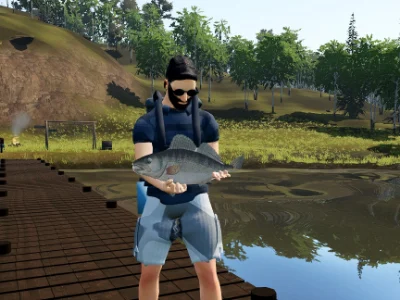
How to recognise a zander
The zander (Sander lucioperca) is a long, grey-green predator with dark vertical bands, a spiny first dorsal fin and large, glassy eyes. Its mouth carries a few long, fang-like teeth among smaller ones. Most zander weigh 1–3 kg, and they grow much bigger in large, deep lakes.
Where zander live
Zander like big, deep, slightly coloured water:
- Drop-offs and breaklines, where shallow water falls into deep.
- Deep basins during bright weather.
- Sunken timber and rocky areas along the edges.
They hunt in small groups, so where you catch one there are usually more.
When zander feed
Zander are fish of low light. Dusk and the night are best, with dawn close behind. Bright, clear days push them deep and make them hard to catch.
Best baits for zander
- Soft-plastic jigs, hopped along the bottom.
- Small live or dead fish fished on the bottom.
- Crankbaits retrieved slowly over the edge at dusk.
How to catch zander
- Find the edge. Locate the drop-off where shallow water meets deep.
- Stay on the bottom. Let the jig touch down, lift it a little and let it fall again.
- Fish as the light goes. The last hour of daylight and the first hours of night are best.
- Wait for the take. Zander bites are subtle — give the fish a moment, then strike.
Zander in Survival Angler
- Found on
- Northwoods Lakes
- Where to look
- Drop-offs, Sunken timber & rock, Deep basin
- Depth
- 2–12 m (7–39 ft)
- Most active
- Dusk & Night
- Best baits
- Soft-plastic jig, Live minnows, Diving crankbait
- Typical size
- 1.8 kg (4.0 lb)
- Trophy from
- 7 kg (15 lb)
- Float (bobber) bite
- Trembles — the float shivers and slowly sinks. Wait for it to commit, then strike.
- How it fights
- Dives for the bottom — lift and gain line between dives.
Numbers come straight from the game’s fish data, so the page and the lake always agree.
In Survival Angler, zander live in the deeper Northwoods lakes — at least three hectares and seven metres deep — and hunt along the drop-offs. The soft jig is their favourite lure: let it sink and hop the bottom. A live minnow under a float works too. Their bite is a tremble: the float shivers and slowly sinks — wait for it to commit, then strike. Hooked zander dive for the bottom, so lift steadily and win line back between dives.
Frequently asked questions
Is a zander the same as a walleye?
No, but they are close relatives in the same genus. Zander (Sander lucioperca) are European; walleye (Sander vitreus) are North American. Both have glassy eyes that see well in low light, both have sharp fangs and both feed best at dusk and night.
What is the best lure for zander?
A soft-plastic jig hopped along the bottom is the most effective zander lure. Small live or dead fish fished on the bottom also work well.
Why do I miss zander bites?
Zander often take a bait very gently and drop it if they feel resistance. Use a sensitive float or light jig, give a moment for the fish to take it properly and then strike firmly.