
Fish species · Trout
Rainbow trout: the acrobat of cold, fresh water
Rainbow trout gather where cold, fresh water runs into a lake. Work a spinner steadily past a creek mouth at dawn or dusk, and be ready when the fish leaps clear of the water.
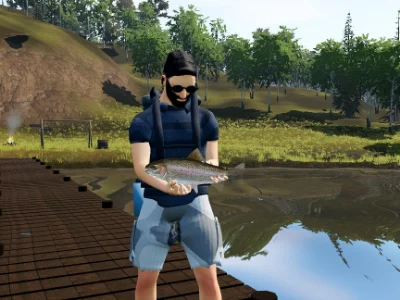
How to recognise a rainbow trout
The rainbow trout (Oncorhynchus mykiss) is a streamlined, silver fish with a pink to red band along its side and small black spots across the back, the fins and the tail. Lake fish are often very silvery. Most rainbows caught weigh 0.5–1.5 kg. Originally from the rivers of the Pacific coast, rainbows have been stocked into cold waters around the world.
Where rainbow trout live
Rainbows need cold, well-oxygenated water:
- Creek mouths and inflows, the best place in any lake.
- Drop-offs and open water when the surface is cool.
- Shallow edges at dawn and dusk, when they move in to feed.
When rainbow trout feed
Rainbows feed hardest at dawn and dusk. Bright, warm middays push them deeper, and they feed little at night.
Best baits for rainbow trout
- Inline spinners, retrieved steadily.
- Worms, drifted near a creek mouth.
- Small spoons and minnow-shaped lures.
- Sweetcorn and small dough baits, especially for stocked fish.
How to catch rainbow trout
- Find the inflow. Fish where a creek enters the lake.
- Retrieve steadily. A spinner turning at an even pace is what trout want.
- Fish the low light. Plan your session for the first and last hours of daylight.
- Keep it tight when it jumps. Lower the rod slightly as the fish leaps, then keep the pressure on.
Rainbow Trout in Survival Angler
- Found on
- Northwoods Lakes & Frostbound Lakes
- Where to look
- Creek mouths
- Depth
- 0.3–6 m (1–20 ft)
- Most active
- Dawn & Dusk
- Best baits
- Inline spinner, Worms & nightcrawlers, Casting spoon
- Typical size
- 0.8 kg (1.8 lb)
- Trophy from
- 3.5 kg (7.7 lb)
- Float (bobber) bite
- Dips — the float bobs, then dips under. Strike as it goes down.
- How it fights
- Leaps clear of the water — keep the line tight when it jumps.
Numbers come straight from the game’s fish data, so the page and the lake always agree.
In Survival Angler, rainbow trout live in Northwoods lakes that have a creek running in, and they gather at the creek mouths. An inline spinner with a steady retrieve is the best lure, and a worm or a casting spoon also works. On the float their bite is a quick dip. Hooked rainbows leap clear of the water — keep the line tight when they jump, or the hook falls out. They sell for one of the best prices per kilo on the map.
Frequently asked questions
What is the best lure for rainbow trout?
A small inline spinner retrieved at a steady pace is one of the most reliable trout lures. Small spoons and minnow-shaped lures also work, and worms or salmon eggs are good natural baits.
Where do rainbow trout hold in a lake?
Near creek mouths and inflows, where the water is cooler and richer in oxygen and food washes in. They also cruise along drop-offs and in open water when the surface is cool.
How do you land a jumping trout?
Keep the line tight and the rod tip up. A trout that jumps on a slack line often throws the hook. Don't try to haul it in — let it run against the drag and tire.