
Fish species · Creek mouths
Arctic grayling: the fish with a sail
A grayling's huge dorsal fin, spotted and edged in colour, looks like a sail. They love cold, clean, moving water — in winter, that means creek mouths.
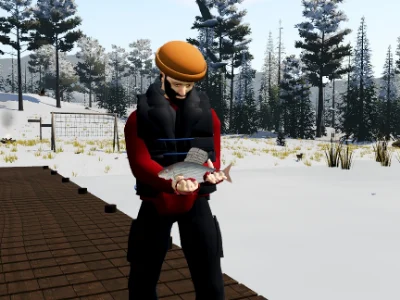
How to recognise an arctic grayling
The arctic grayling (Thymallus arcticus) is a slim, silver-grey fish with a small mouth, scattered dark spots near the head and a huge sail-like dorsal fin spotted with blue, green and red. Typical fish weigh 300 g to 1 kg.
Where arctic grayling live
Grayling need cold, clean water with current:
- Rivers and streams of the far north.
- Creek mouths and outlets of lakes, where moving water brings food and oxygen.
- Shallow, gravelly water, usually less than a few metres deep.
When arctic grayling feed
Grayling are daytime feeders, active from morning to evening. At night they rest.
Best baits and lures
- Worms and other small natural baits drifted with the current.
- Small inline spinners retrieved steadily.
- Small jigs twitched near the bottom.
How to catch arctic grayling
- Find moving water — a creek mouth or a lake outlet.
- Fish small — grayling have small mouths.
- Keep the lure moving with a steady or twitching retrieve.
- Be careful in winter. Moving water keeps the ice thin or open near creek mouths.
Arctic Grayling in Survival Angler
- Found on
- Frostbound Lakes
- Where to look
- Creek mouths, Shallows
- Depth
- 0.3–3 m (1–10 ft)
- Most active
- Daytime & Dawn
- Best baits
- , Worms & nightcrawlers, Inline spinner
- Typical size
- 0.5 kg (1.1 lb)
- Trophy from
- 1.4 kg (3.1 lb)
- Float (bobber) bite
- Dips — the float bobs, then dips under. Strike as it goes down.
- How it fights
- Leaps clear of the water — keep the line tight when it jumps.
Numbers come straight from the game’s fish data, so the page and the lake always agree.
On the Frostbound Lakes, arctic grayling gather at creek mouths and in the shallows, 0.3–3 metres down, and feed through the day. The ice at a creek mouth stays thin, and near the mouth itself the water is open. Fish them from solid ice at a safe distance with a worm or an inline spinner, retrieved steadily or with twitches — the short ice rods cast 10–15 metres into the open water. The float bite is a quick dip, and hooked grayling leap.
Frequently asked questions
Why does the grayling have such a big fin?
Male grayling use their large, colourful dorsal fin to court females and hold them close during spawning. Both sexes have a big fin, but the males' is larger and brighter.
Where do grayling live?
In cold, clear, well-oxygenated rivers, streams and lakes of the far north — in North America mostly Alaska and northern Canada.
What do grayling eat?
Mainly insects, both drifting larvae and adults on the surface, plus small fish and eggs. Small spinners, small jigs and worms work well.