
Fish species · Catfish
Brown bullhead: the night-time catfish
When the sun goes down and most fish go quiet, bullheads come out to feed. A worm on the bottom after dark is about as reliable as fishing gets.
How to recognise a brown bullhead
The brown bullhead (Ameiurus nebulosus) is a small North American catfish. It has smooth, scaleless skin, mottled brown to olive, a broad flat head and eight barbels — the "whiskers" around its mouth. Its tail is square rather than forked, and sharp spines sit at the front of its dorsal and pectoral fins. Most bullheads weigh 200–600 g.
Where bullheads live
Bullheads are tough fish that cope with warm, weedy and even low-oxygen water where other species struggle. Look for:
- Soft, muddy bottoms in ponds, bays and lake margins.
- Sunken logs and timber, where they hide during the day.
- Creek mouths and inlets, especially after rain washes food in.
When bullheads feed
Bullheads are night feeders. They hunt by smell and touch rather than sight, using their barbels to taste the bottom, which makes darkness no problem at all. The hour after sunset and the first part of the night are usually the best time, and warm summer nights are ideal.
Best baits for bullhead
- Nightcrawlers and earthworms — the number one bait.
- Chicken liver and cut fish in waters where they're allowed.
- Small live or dead minnows.
- Dough baits and other scented baits.
How to catch bullheads
- Fish at night. Start at dusk and keep going after dark.
- Fish on the bottom. Set the float so the bait lies on the bottom, or use a simple bottom rig.
- Fish near cover. Close to sunken logs and along muddy margins.
- Use smelly bait. A big, fresh worm gives off plenty of scent.
- Give it a moment. Bullheads often mouth the bait and move off with it. Strike when the float slides steadily away.
Handling bullheads
Watch the spines. Slide your hand over the fish from the front, so the dorsal spine sits between your fingers and the pectoral spines are pinned under your palm. Bullheads often swallow the hook, so strike promptly and carry a disgorger.
Brown Bullhead in Survival Angler
- Where to look
- Sunken timber & rock, Creek mouths, Shallows
- Depth
- 0.5–6 m (2–20 ft)
- Most active
- Night
- Best baits
- Worms & nightcrawlers, Live minnows
- Typical size
- 0.3 kg (0.8 lb)
- Trophy from
- 1.2 kg (2.6 lb)
- Float bite
- Slides away — the float glides off across the surface. Strike once it is moving steadily.
- How it fights
- Head-shaking and thrashing close in — keep steady pressure.
Numbers come straight from the game’s fish data, so the page and the lake always agree.
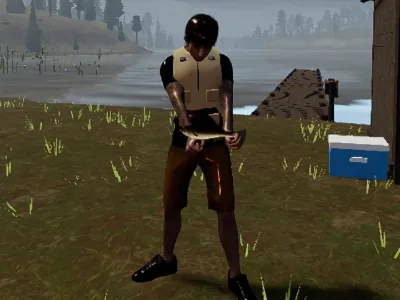
In Survival Angler, bullhead come out at night around sunken logs and the creek mouths. A worm on the bottom — the float set deeper than the water — is all you need; they can smell it from far away. The bite is a slide: the float moves steadily off across the surface. Bullheads thrash in close rather than run. Bring a headlamp.
Frequently asked questions
What is the best bait for bullhead?
Worms — especially nightcrawlers — are the classic bullhead bait. Bullheads find food mostly by smell and taste, so fresh, smelly natural baits work best.
When do bullheads bite?
Mostly at night, from dusk onward. They also bite in murky water during the day, but darkness is when they really roam and feed.
Do bullheads sting?
Bullheads have sharp spines in their dorsal and pectoral fins that can give a painful jab. Hold the fish carefully from behind, with your hand flat over the back, avoiding the spines.